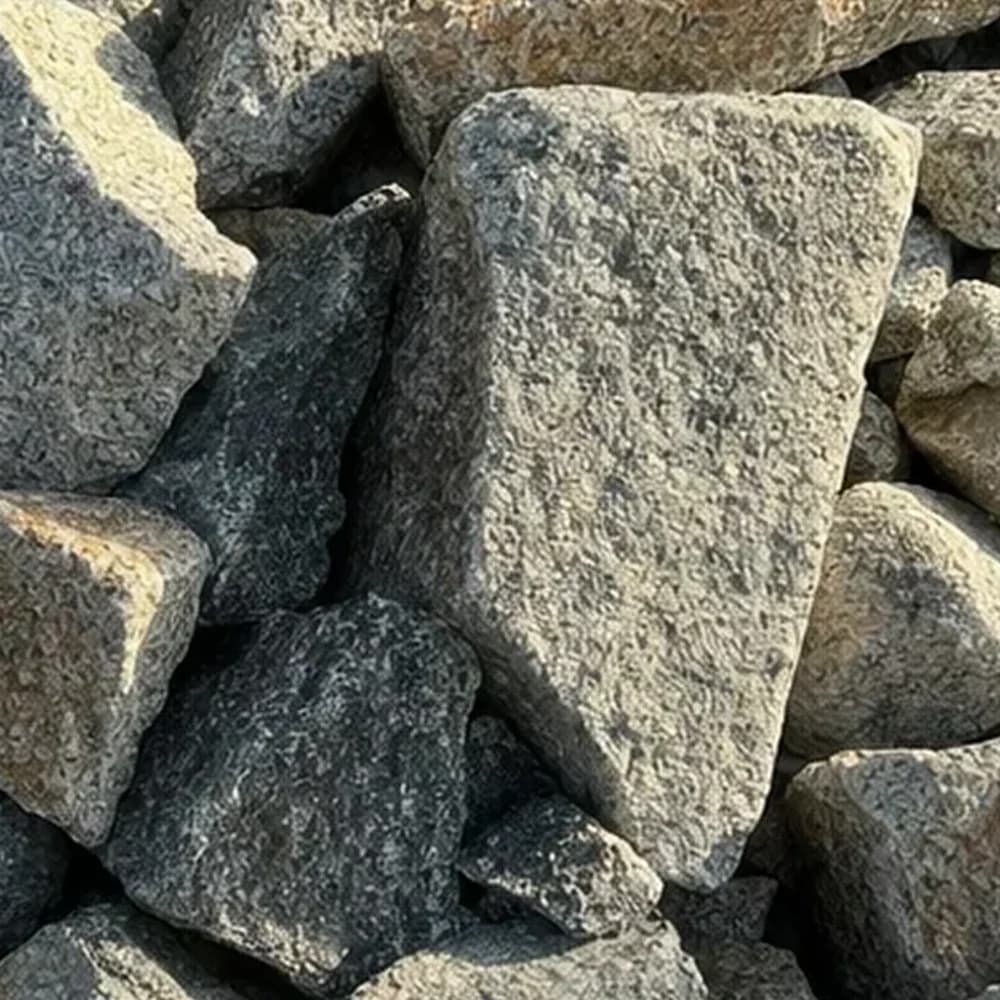
Rip rap calculator for Wyoming
Calculate armor-stone tonnage for slopes and shorelines using installed layer depth, not shallow landscaping coverage.
Enter your project dimensions
At 17 square feet per ton, riprap coverage is far less than landscape rock. Armor stone is placed in layers 12 inches or deeper, which is why a pile can seem small relative to the bank it covers. This calculator bases the estimate on layer thickness and 3,100 lb per cubic yard for material commonly sized 4 to 12 inches and larger.
How to measure an armored bank
- Take the slope measurement along its face rather than across level ground, then multiply it by the shoreline or channel length.
- For effective erosion control, use at least 12 inches of stone. Set total layer depth at 1.5 to 2 times the largest stone size.
- For tons: cubic feet ÷ 27 for cubic yards, then multiply by 1.55.
Tons of coverage
| Layer thickness | 1 ton covers | Tons per 100 sq ft |
|---|---|---|
| 12 inches | ≈ 17 sq ft | 5.7 |
| 18 inches | ≈ 12 sq ft | 8.6 |
| 24 inches | ≈ 9 sq ft | 11.5 |
Installation details for stable riprap
- Start with fabric or a bedding layer: use non-woven geotextile beneath the rock, or 3-4 inches of #4 stone. Placing riprap directly on soil may appear sound for a season, but loss of soil underneath can cause the bank to slump.
- Start by setting the toe. The first course belongs below the waterline or anticipated scour depth, since riprap unravels from its base upward.
- Prepare the bank at 2:1 or flatter before installing the stone. If the face is steeper, it calls for engineering rather than extra rock.
- Use equipment or hand placement to seat the exposed top stones so they lock together rather than stop where they land.
- Extend the apron downstream from a culvert outlet for 4-6 pipe diameters, since that reach takes the erosive flow.
Example calculation: 50 feet of pond bank
For a 50-foot shoreline run with a 6-foot sloped face, the area is 300 square feet. With an 18-inch placement depth, the calculation is 300 x 1.5 = 450 cubic feet = 16.7 cubic yards. Plan on roughly 26 tons of riprap, or 27 after allowing a little extra. Place geotextile below the stone, or use about 4 tons of #4 stone as a rock bed instead. Before ordering, inspect the truck access, particularly the final 20 feet approaching a pond. During spring melt, loaded trucks can bog down there, and relocating stone twice means paying for placement twice.
Following the first major storm
When the water level has gone down, make a pass along the bank. Note any rock displaced at the toe, bare soil visible through the stone, or exposed fabric. Set moved stone back in place, use reserve material where coverage is light, and examine the outfall apron for scour. A couple of short checks each year, about Ten minutes at a time, are usually all the upkeep required: riprap is intended to keep the bank protected with little ongoing work.
A short guide to size classes
Choose stone size based on water force. Four to eight inch riprap is suitable for pond banks, slow streams and downspout outfalls. Eight to twelve works for lake shores subject to boat wake and quicker channels. Engineered applications (highways, spillways) have specified sizes and depths, so follow the plans instead of this guide. If choosing between sizes, select the larger material and use a thicker layer; added weight provides more tolerance.
Riprap sizing, tonnage and placement
How can I calculate the riprap I need?
What area will 1 ton of riprap cover?
What does 1 ton of riprap look like?
What is the price of 1 ton of riprap?
What layer depth should riprap have?
Is hand placement an option for riprap?
Other calculators
Riprap for bank protection.
RipRap is available by the ton with free delivery; include #4 bedding stone for the layer below.