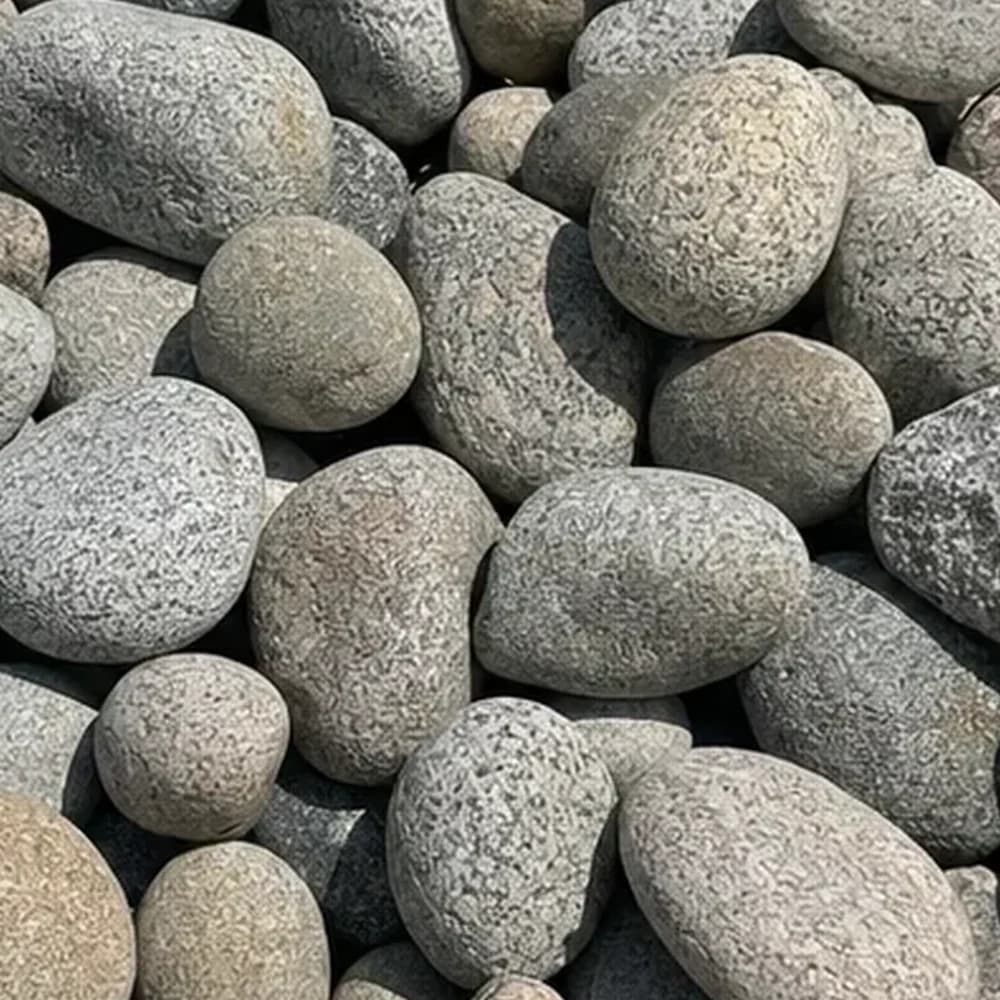
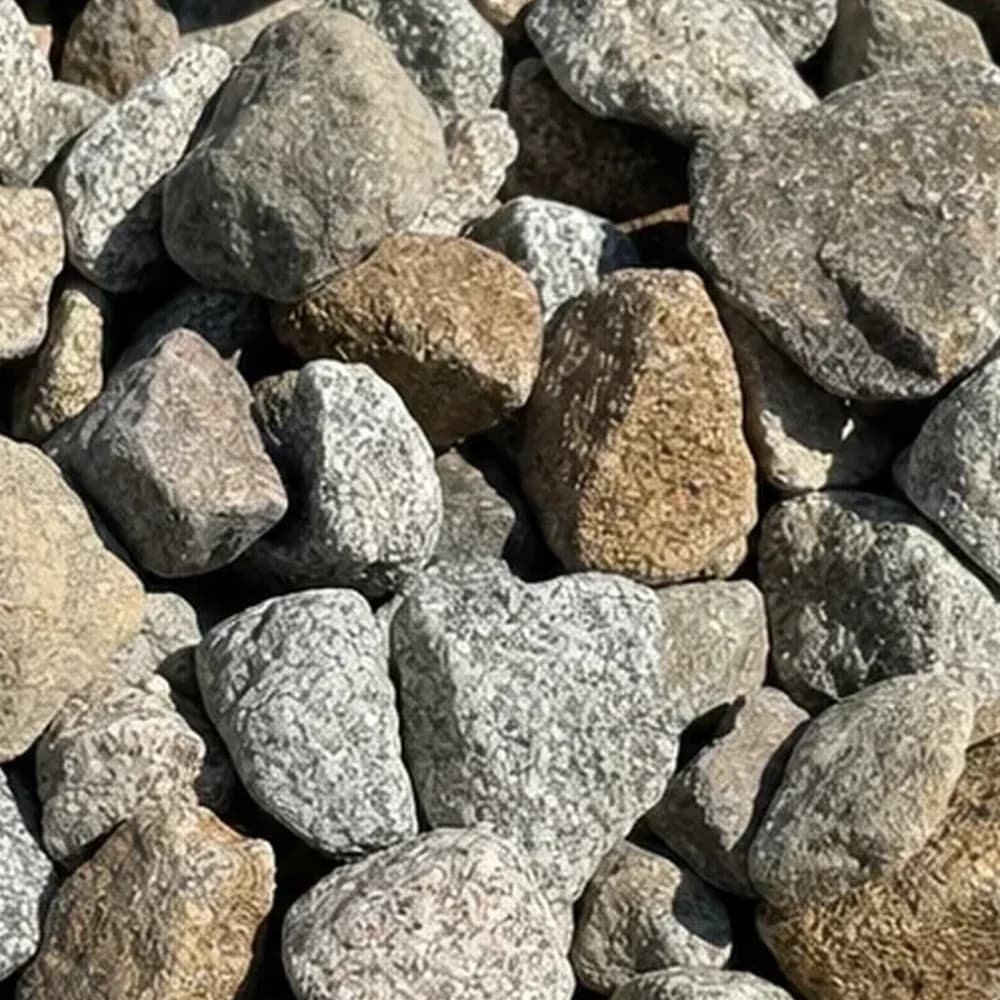
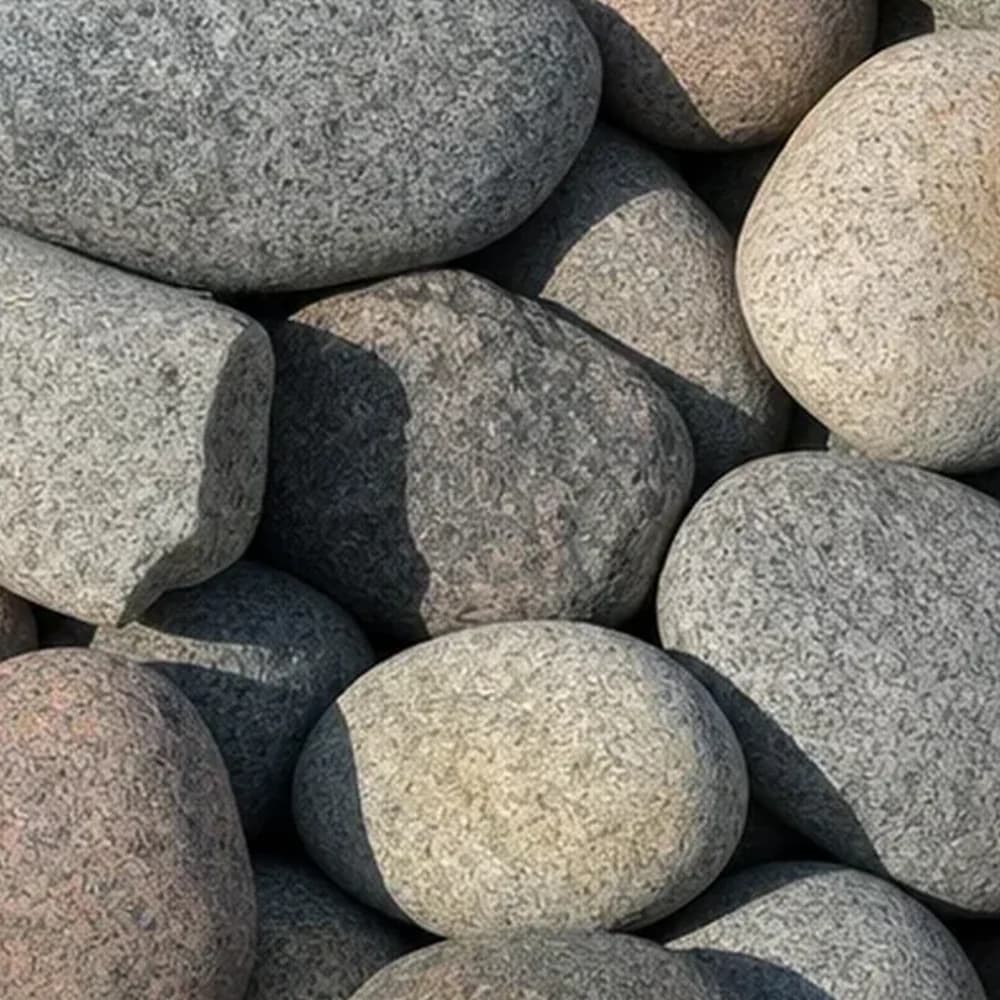
River rock calculator for Wyoming
Rock size changes the coverage: a ton of 3-inch material covers half the area of a ton of 1-inch rock.
Enter your project dimensions
River rock coverage changes with the stone size. Plan on a layer roughly twice the rock diameter to keep soil hidden: 1-inch material needs 2 inches, while 3-inch stone requires 4 inches or more. That leaves the tonnage unchanged but cuts the coverage area in half. Select the rock size and enter the bed measurements, and the calculator uses river rock's 2,700 lb per cubic yard to determine tons. The delivery pile may also seem smaller than expected. One ton is only three-quarters of a cubic yard. When fabric remains visible after spreading, the issue is insufficient depth, not too little material.
Plan the order
- Enter the dimensions in feet for each bed and border; multiple-areas mode combines the separate areas.
- Make the layer twice the rock diameter: 2 inches with 3/4 to 1 inch stone, 3 to 4 inches with 1 to 3 inch stone, and 4 to 5 inches for larger pieces.
- Divide cubic feet by 27 for cubic yards, then multiply yards by 1.35 for tons.
Ton coverage by rock size
| Stone size | Layer depth | 1 ton covers |
|---|---|---|
| 3/4-1" river rock | 2 inches | ≈ 120 sq ft |
| 1-3" river rock | 3 inches | ≈ 80 sq ft |
| Large river rock (2-4") | 4-5 inches | ≈ 53 sq ft |
| Oversize accents | single layer | 35-50 sq ft |
| Project | Typical size | Depth | Volume | Weight |
|---|---|---|---|---|
| Foundation border | 40 x 3 ft | 3" | 1.1 yd³ | 1.5 tons |
| Dry creek bed | 25 x 4 ft | 4" | 1.2 yd³ | 1.7 tons |
| Accent beds | ≈ 150 sq ft | 2" | 0.9 yd³ | 1.3 tons |
| Downspout splash zones, x4 | 3 x 2 ft each | 3" | 0.2 yd³ | 0.3 tons |
| Front-yard xeriscape | ≈ 600 sq ft | 3" | 5.6 yd³ | 7.5 tons |
Install fabric before rock
Bare ground lets rock settle down over time, while weeds work up through the gaps. After three years, that can leave a bed needing more stone, where a few dollars a roll of fabric could have avoided it. Put down non-woven fabric, fasten it with pins, and spread the rock over it. For drain rock carrying water, enclose the stone with the fabric instead of laying fabric beneath it.
Natural-looking rock bed layouts
- Combine two sizes: use 1 to 2 inch rock for the main layer, then group larger stones in clusters. A single uniform size can resemble a parking lot median.
- Set the largest stones into a dry creek bed one third of the way down. That keeps them from looking like they were laid on top.
- After the rock is spread, hose it off. Quarry dust from delivery can leave the color looking gray until it is rinsed away.
- At a foundation, lay fabric first and use a 3 to 4 inch layer that slopes gently away from the wall. This gives the edge a finished appearance while carrying roof runoff along.
- Clear leaves using a blower set low. A rake can throw rock into the lawn, where it may later be struck by mower blades.
Worked example: 200-square-foot bed
For a one-inch river rock layer 2 inches deep, 200 x 0.167 = 33 cubic feet = 1.2 cubic yards, about 1.7 tons. Order two tons. Put the extra along the front edge, where the layer gets noticed most and wears down first.
Rock versus mulch over five years
Mulch improves the soil and costs less with each delivery, but it needs renewing every year or two. River rock has a higher first cost and generally keeps its appearance through year five. It can heat the soil in summer, so mulch usually belongs in planted beds, while rock works for edging, drainage runs, and borders. Enter identical dimensions in both calculators to compare tonnage and see the cost difference directly.
River rock coverage and pricing FAQs
How can I figure the river rock quantity needed?
What square-foot area will 1 ton of river rock cover?
What coverage comes from 50 lbs of river rock?
What is the cost of a ton of river rock?
What depth does river rock need?
Is landscape fabric needed beneath river rock?
Can river rock be installed over mulch?
What does a cubic yard of river rock weigh?
Other calculators
Maintain rock beds as needed.
River rock, large river rock, and drain rock sold by the ton with free delivery included.